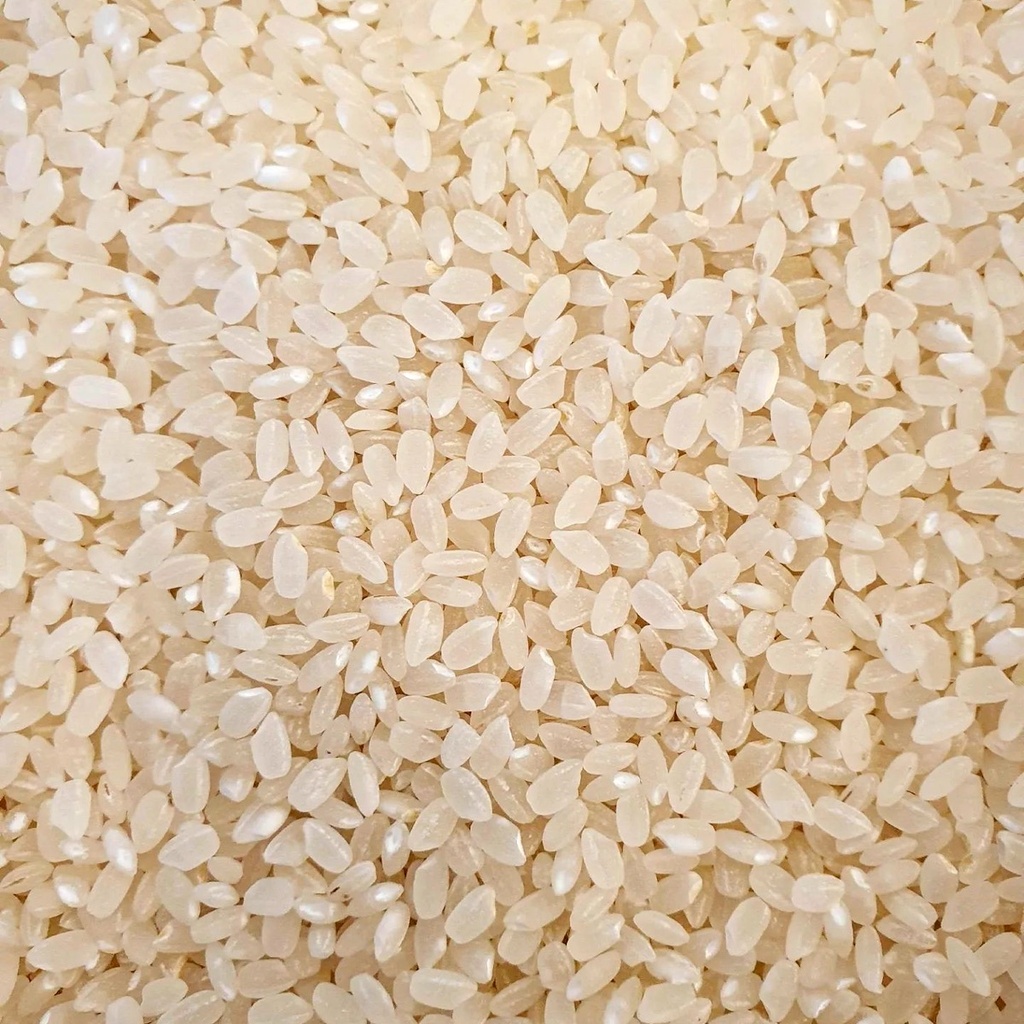
![[A067] Rice Koshihikari of Niigata](/web/image/product.product/24234/image_1024/%5BA067%5D%20Rice%20Koshihikari%20of%20Niigata?unique=95606c7)
5.00 €
Japanese white rice
Almost all Japanese food revolves around Japanese rice: anyone who wants to familiarize themselves with traditional Japanese cuisine known as "washoku" must start by understanding the importance of rice... And especially learn how to cook it. Fortunately, in addition to being a delight, Japanese rice is an absolutely fascinating subject.
Japanese rice, known as Japonica or Sinica, is believed to have been domesticated in central China almost 10,000 years ago. Pushed quite far, any Japanese culinary adventure often leads to the same conclusion: in Asian gastronomy as well, the Chinese have invented almost everything...
This variety is distinguished from the more popular long Indica rice in Southeast Asia by its dimensions: its grains are rounder, plumper, firmer, but also stickier. That's the big picture. Over centuries of cultivation and selection, Japanese farmers have created more than 700 cultivars from the original Japonica.
Hundreds of rice varieties
These hundreds of varieties, which are to rice what grape varieties are to wine, are divided into two main families: table rice "uruchimai" and sticky rice "mochigome". The "uruchimai" varieties are generally those that fill the rice bowl around which almost all Japanese meals revolve.
They are also part of the composition of sushi, onigiri, chirashi… But also of sake and shochu. As the name suggests, the sweeter and stickier representatives of "mochigome" are rather used in the making of traditional pastries such as mochi, daifuku, and wagashi.
A legitimate question arises here: what could be the parameters that distinguish the hundreds of varieties that make up each of these two large families? They are numerous: the size, weight, and nutritional value of the grains, the texture, color, strength, and depth of flavor…
The more rice is consumed, the more these seemingly minor differences become striking. A round, firm, and protein-rich koshihikari has little in common with a tender, GABA-rich fukumaru. The approximately 300 varieties that are currently growing on the archipelago do have one thing in common: they are proudly cultivated by rice farmers.
The links between rice and Japan
It is difficult to accurately describe the complex links that unite rice and Japan. Long used as a measure of wealth in ancient Japan, the grain is also closely tied to Shinto worship. Its exchange in feudal Japan is said to have laid the foundations of the current banking system through the Dojima rice market, depicted a thousand times in the prints of its time.
Furthermore, the imperial family has its own rice paddy within the grounds of its Tokyo palace. Every year, the Emperor himself conducts a ceremony during which he harvests and offers the mature plants to the gods as a sign of gratitude. Finally, many "ordinary" Japanese come from rural towns where rice has been cultivated for centuries. For many, the taste of this "home rice" will always evoke nostalgia.
Unfortunately, Japan is notoriously poorly endowed with arable land and can only ensure 40% of its food autonomy. Due to the strong political, cultural, and historical factors mentioned above, rice cultivation is nevertheless fiercely defended by powerful unions and vigorously supported by the Japanese government, particularly against globalization and the strong associated competition.
In other words, Japanese rice is here to stay, and that’s great news for everyone. All that’s left is for you to discover it.
![[A006] Masakado Organic Rice](/web/image/product.product/18313/image_1024/%5BA006%5D%20Masakado%20Organic%20Rice?unique=8f573b8)
29.00 €
![[A020] Fukumaru Japanese Rice](/web/image/product.product/19155/image_1024/%5BA020%5D%20Fukumaru%20Japanese%20Rice?unique=d138211)
17.50 €
![[A048] Mitsuhikari Rice from Toyama](/web/image/product.product/21428/image_1024/%5BA048%5D%20Mitsuhikari%20Rice%20from%20Toyama?unique=95606c7)
![[A007] Koshihikari Rice](/web/image/product.product/18314/image_1024/%5BA007%5D%20Koshihikari%20Rice?unique=201c7ab)
17.00 €
![[L003] 100% Glutinous Rice Mochi](/web/image/product.product/18366/image_1024/%5BL003%5D%20100%25%20Glutinous%20Rice%20Mochi?unique=95606c7)
11.50 €
![[A044] Rice of high quality "Yumegokochi"](/web/image/product.product/21087/image_1024/%5BA044%5D%20Rice%20of%20high%20quality%20%22Yumegokochi%22?unique=95606c7)
![[A053] “Yuki no sei” sushi rice](/web/image/product.product/21677/image_1024/%5BA053%5D%20%E2%80%9CYuki%20no%20sei%E2%80%9D%20sushi%20rice?unique=a762381)
![[A060] Japanese rice spécial onigiri](/web/image/product.product/22861/image_1024/%5BA060%5D%20Japanese%20rice%20sp%C3%A9cial%20onigiri?unique=aa0efb8)
![[A062] Rice Koshihikari from Ishikawa (10kg bag)](/web/image/product.product/23682/image_1024/%5BA062%5D%20Rice%20Koshihikari%20from%20Ishikawa%20%2810kg%20bag%29?unique=c3b5742)
![[A064] Rice biologique "Nikomaru 5 étoiles"](/web/image/product.product/23935/image_1024/%5BA064%5D%20Rice%20biologique%20%22Nikomaru%205%20%C3%A9toiles%22?unique=0060393)
![[A063] Rice "Milky Queen" d'Ishikawa](/web/image/product.product/23881/image_1024/%5BA063%5D%20Rice%20%22Milky%20Queen%22%20d%27Ishikawa?unique=20d1ed7)
10.00 €
![[A008] Japanese Rice "Haenuki"](/web/image/product.product/18315/image_1024/%5BA008%5D%20Japanese%20Rice%20%22Haenuki%22?unique=a762381)
![[A052] Rice Yumepirika high quality of Hokkaido](/web/image/product.product/21661/image_1024/%5BA052%5D%20Rice%20Yumepirika%20high%20quality%20of%20Hokkaido?unique=27a329f)
