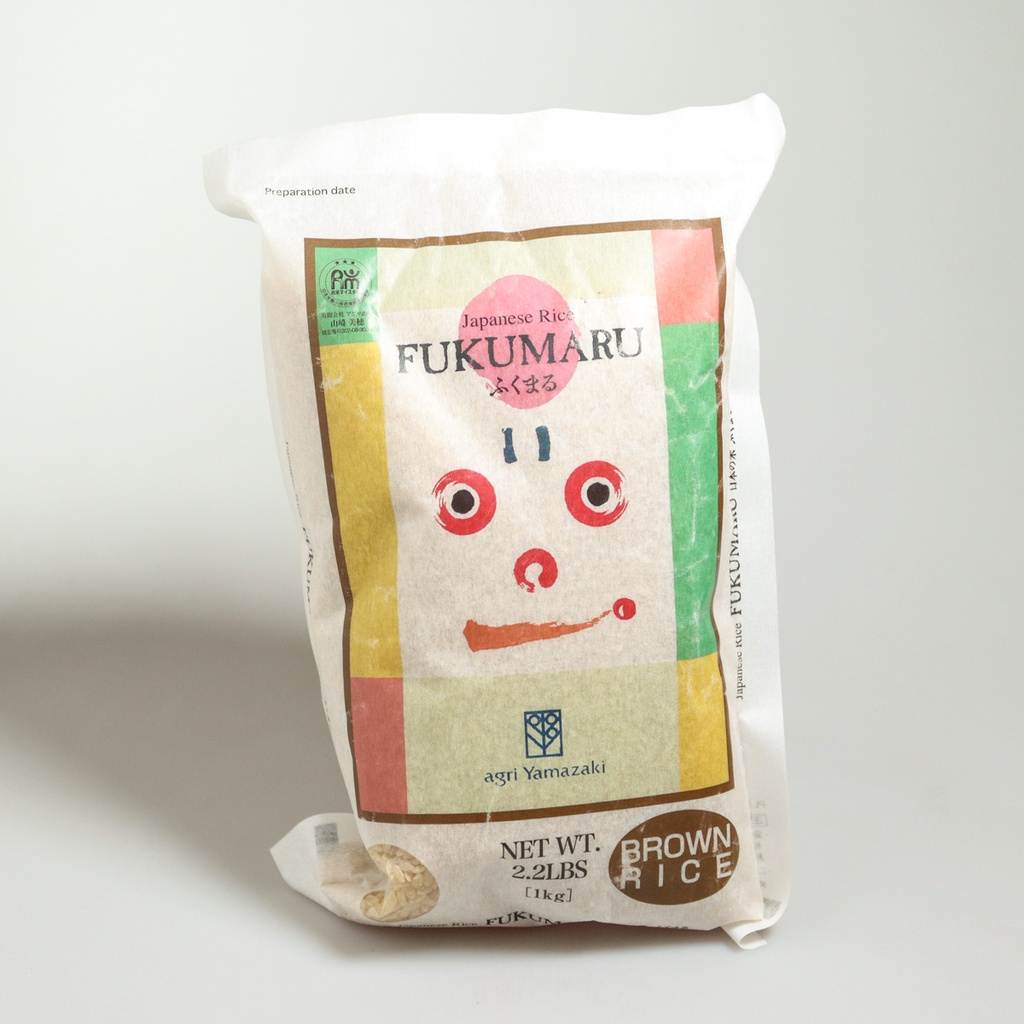
17.50 €
Brown & black rice
In Japan, brown rice is called "genmai." This term refers to both rice that still has all its bran (completely whole) and rice that has been partially stripped of it (semi-whole). But in a stroke of genius, the Japanese have developed the family of semi-whole rice into many more or less polished variants called "buzukimai."
Some Japanese shops and supermarkets equipped with polishers offer their customers the option to polish their semi-whole rice to their liking: if you want the grains to have only 30% of their bran left, that’s possible.
The different varieties of brown rice
In our regions, grocery stores unfortunately do not have home polishers, and buzukimai are rare or even unavailable. It is easier to find sprouted brown rice called "hatsuga-genmai" or rice that has been stripped of the bran but not the germ, known as "haiga-mai"… But also rice referred to as "red" or "black," notably rich in vitamins and trace elements.
These varieties once related to weeds are now used to enhance the nutritional value of a bowl of white rice while giving it a beautiful pink or slightly purple color. Such mixtures will help you avoid contracting beriberi, the disease that once afflicted Japanese nobles too fond of white rice…
The benefits of this Japanese rice
Indeed, the Japanese rice as one imagines it, white and pearly like a pearl, seasoned in a maki or steaming under a breaded pork cutlet tonkatsu, is a processed product: through friction in rice polishing machines, it has been stripped of its brown husk, its outer layers, and its germ.
Its taste, texture, and especially its nutritional value have been disrupted: softer and more elegant, the grains contain significantly fewer fibers, vitamins, and minerals than brown rice. The solution? Eat brown rice, plain and simple!
